India to teach AI from Class 3 in schools from 2026-27
By | Education | 11-Oct-2025 12:14:28
News Story
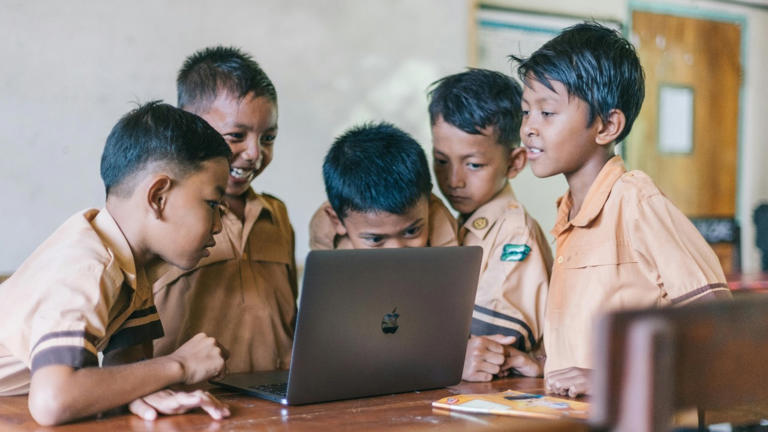
India is set to integrate Artificial Intelligence (AI) into its school
curriculum for students from Class 3 onwards starting the 2026-27 academic
year, the Ministry of Education announced. The move is aimed at preparing the
next generation for the fast-evolving digital economy.
A comprehensive framework for AI education is
under development to ensure both students and teachers are ready for the
technological shift. “We need to move fast so that students and teachers are
properly aligned with this technology over the next two to three years. The
challenge will be to reach out to over one crore teachers across the country
and orient them in imparting AI-related education,” said School Education
Secretary Sanjay Kumar.
The Central Board of Secondary Education
(CBSE) is currently designing the curriculum for AI integration across grades.
A pilot project is already underway, training teachers to use AI tools for
lesson planning. “Our objective is to prepare both the learner and the teacher
for the digital economy,” Kumar added.
Currently, AI is offered as a skill subject in
over 18,000 CBSE-affiliated schools for students from Class 6 onwards, and as
an optional subject for Classes 9 to 12. Expanding AI education to younger
students represents a significant step in India’s strategy to build digital
literacy and future-ready skills from an early age.
Job
disruption and opportunities
The announcement coincided with the release of
a NITI Aayog report on AI and employment, which highlighted the dual impact of
AI on India’s workforce. The report estimates that while around two million
traditional jobs may be displaced, eight million new roles could be created if
the right ecosystem is built.
It recommended strong collaboration between
the proposed India AI Talent Mission and the ongoing India AI Mission,
alongside partnerships between academia, government, and industry to provide adequate
infrastructure and data availability. Such coordination, the report stressed,
is crucial to nurturing the next generation of innovators and AI researchers.
“With timely implementation, India can not only safeguard its workforce but also emerge as a global leader in shaping the future of AI,” the report concluded, urging immediate and coordinated action across all sectors.