Maharashtra's Pharmacy College Boom Going Bust? Unchecked Growth of Pharma Courses Raises Livelihood Concerns
By Administrator | Education | 28-Jul-2026 12:32:20
News Story
Mumbai: Maharashtra has witnessed a rapid rise in the number of pharmacy colleges over the past decade, but experts and education officials are now raising concerns that the unchecked expansion is creating more graduates than the job market can absorb.
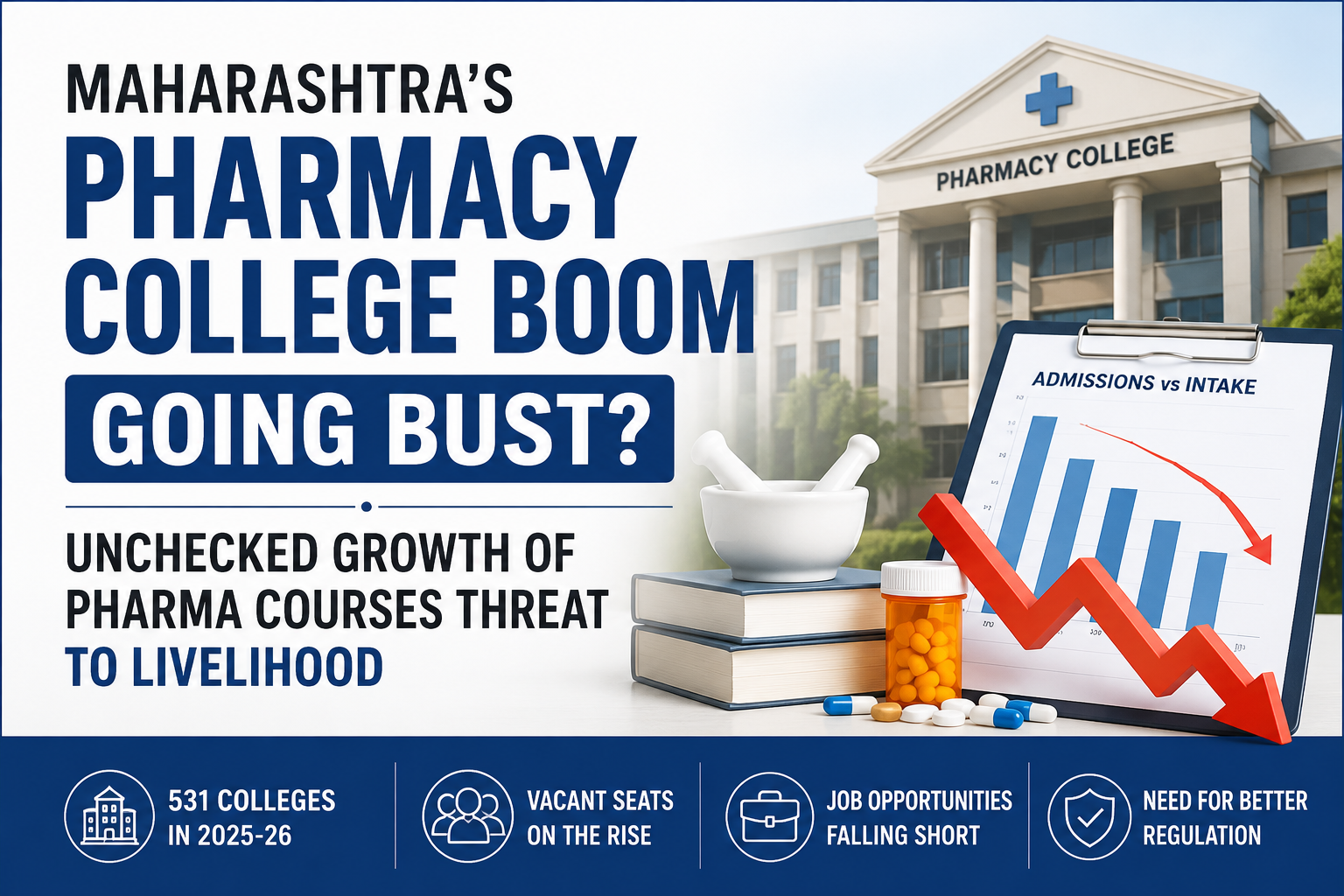
According to data from the State Directorate of Technical Education (DTE) and the Maharashtra CET Cell, the number of B.Pharm colleges in the state increased from 168 in 2016-17 to 531 in 2025-26. During the same period, approved student intake rose from 11,588 to 48,878, while actual admissions reached only 32,951, leaving thousands of seats vacant.
Admissions Fail to Match Growing Intake
Initially, pharmacy education expanded in line with student demand. However, after 2022, the growth of new colleges accelerated while admissions remained relatively stagnant. In 2025-26, 158 out of 531 colleges failed to fill even half of their approved seats. Additionally, 11 colleges received no admissions, while 37 institutions enrolled fewer than 10 students.
Education experts believe many newly established institutes are struggling due to low enrolment, faculty shortages, and increasing competition.
Industry Growth but Rising Supply
The expansion of pharmacy colleges coincided with the rapid growth of India's pharmaceutical industry, particularly during the COVID-19 pandemic. Increased awareness of careers in research, drug manufacturing, clinical studies, and pharmacovigilance encouraged more institutions to introduce pharmacy programmes.
However, experts now say the supply of pharmacy graduates has exceeded industry demand, making it difficult for many graduates to secure suitable employment.
Quality Concerns and Regulatory Action
The rapid increase in pharmacy institutes has also raised concerns over educational quality. Last year, the Maharashtra government inspected around 150 newly established pharmacy colleges after reports of inadequate infrastructure and faculty.
Following the inspection, the Pharmacy Council of India (PCI) temporarily restricted admissions in several institutes for failing to meet prescribed norms, although some colleges later received relief after complying with the requirements or obtaining court orders.
Experts Call for Better Regulation
Education experts have urged the Maharashtra government, universities, and the Pharmacy Council of India to regulate further expansion of pharmacy colleges and focus on improving quality instead of increasing seats. They believe maintaining a balance between admissions, employability, and industry demand is essential to protect the future of pharmacy graduates.